The RecipeTin Eats’ pizza dough recipe has landed! An easy pizza crust that makes an exceptional homemade pizza – puffy crust with a chewy, flavourful crumb inside. Enough structure to pick up, but not thin and stiff like a cracker.
5 minutes kneaded by hand or 40 seconds flat using a food processor. Top with anything your heart desires – see our Pizza Sauce and favourite pizza toppings! No yeast? No worries – use my Secret No Yeast Pizza Dough.

Pizza Dough recipe
This is the RecipeTin Eats’ family pizza dough recipe. It’s a rare thing when the entire RTE family agrees on something to do with food. So when I tell you that we all agree this is the best pizza crust recipe, that means something!
.jpg)

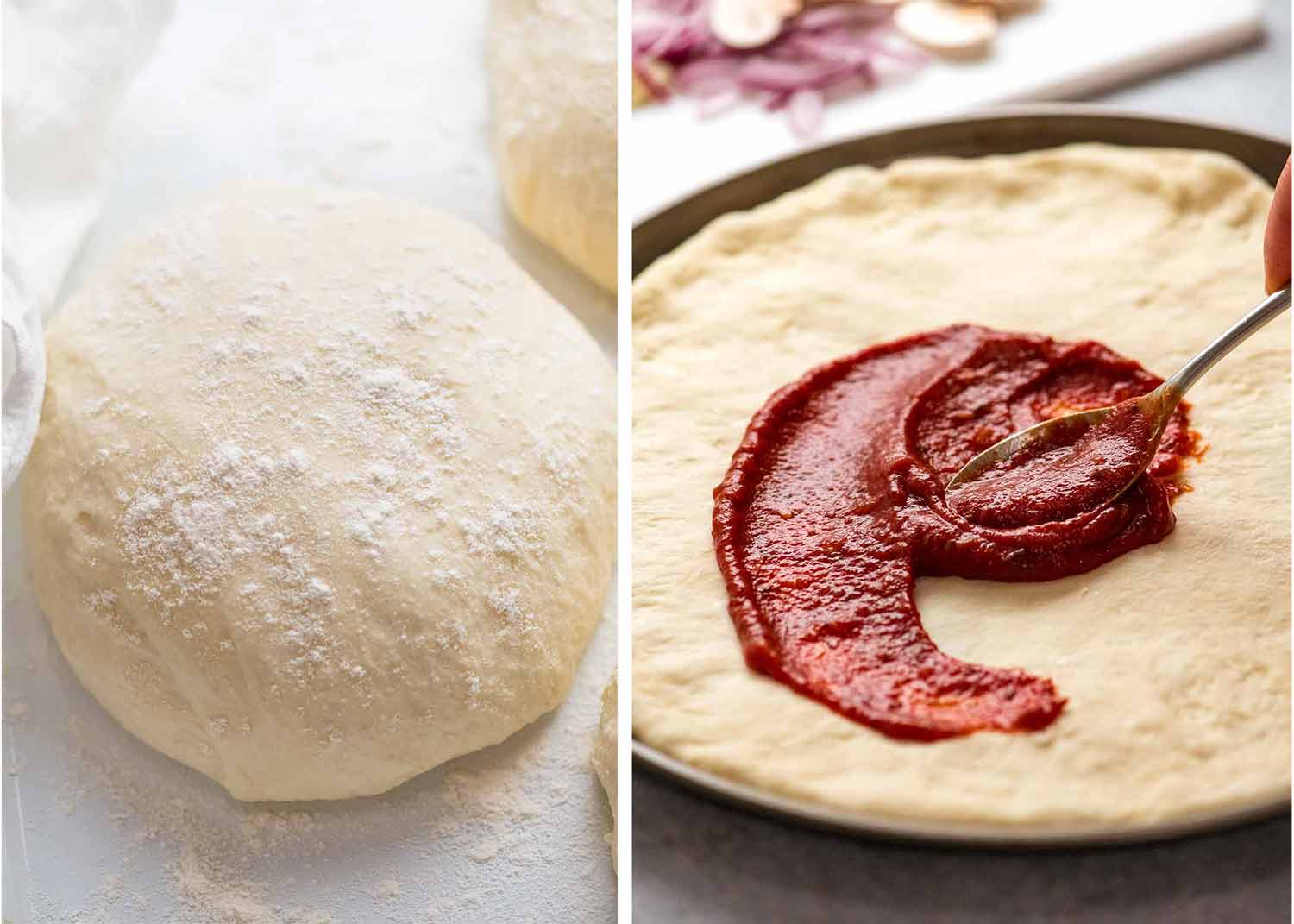
How to make homemade pizza – 3 easy steps
Make dough & Rise 1 – make the dough, Rise #1 for 1 – 2 hours
Balls & Rise 2 – form 3 balls, then do Rise #2 for 1 hour;
Top & bake – Stretch out to make pizza crust, spread with sauce, toppings of choice, bake 10 minutes!
Useful tip: The dough can be made ahead up to 5 days. And it can sit around for hours once the individual pizza balls are formed. So don’t fret about getting the timing exactly right!
What you need for pizza dough
Here’s what you need to make pizza dough:
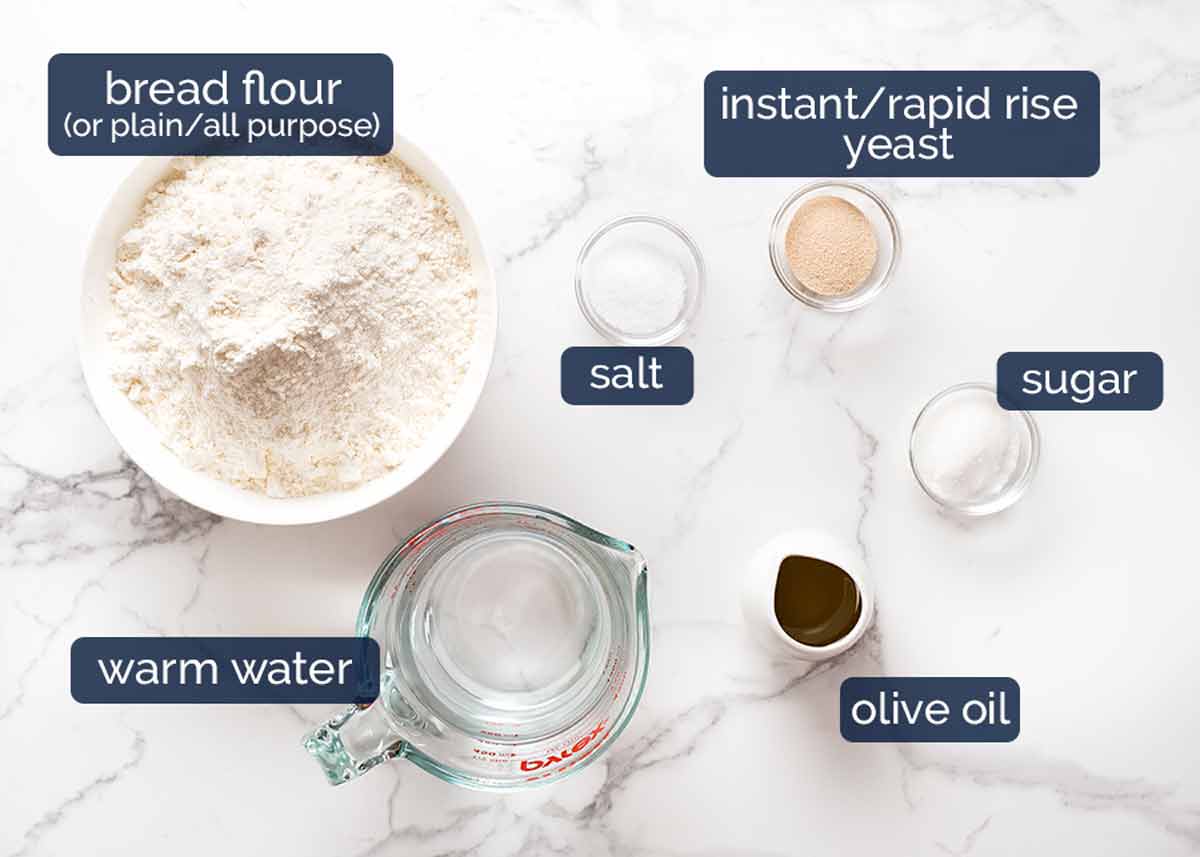
Yeast – instant / rapid rise yeast is what I use because it makes the dough rise faster and eliminates the need to dissolve yeast in water. However, the recipe includes directions for active dry yeast too (ie ordinary yeast powder);
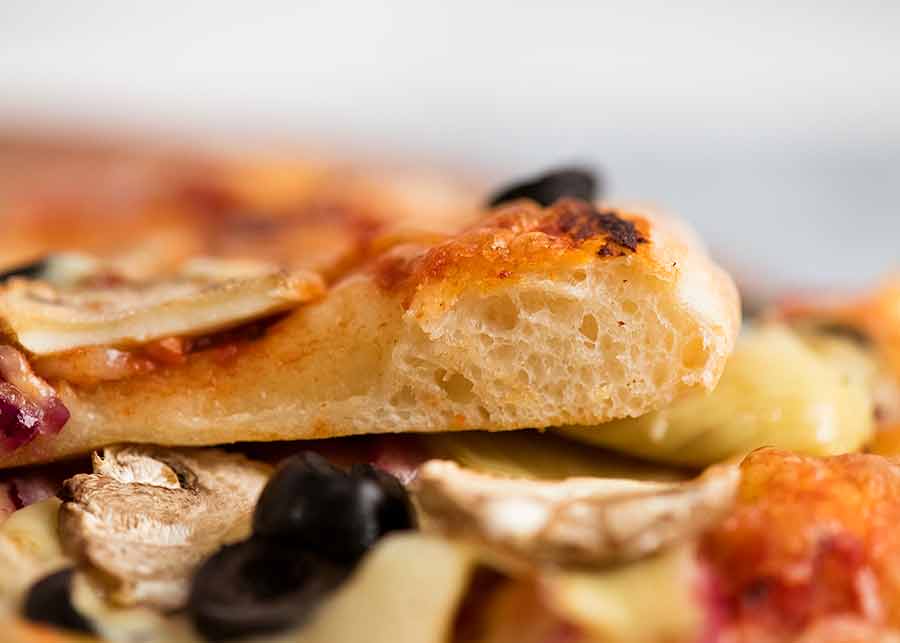
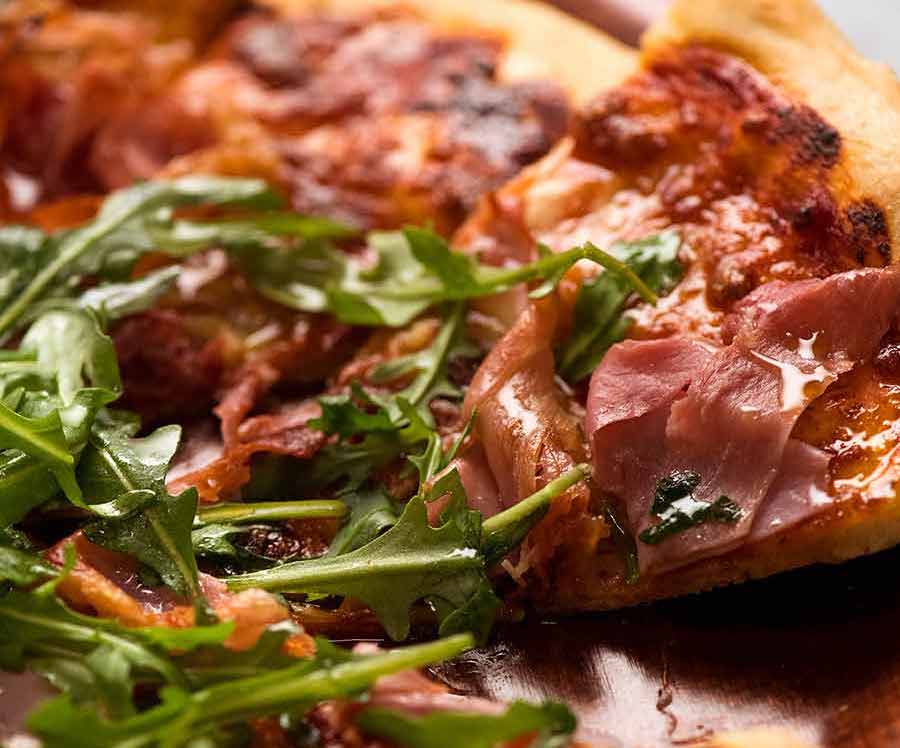
Bread – While plain/all purpose flour will work just fine, the best flour for pizza dough is bread flour or pizza flour which are high protein flours. It makes the crust chewier and creates big holes just like you get from your favourite Italian pizza shops – see photo below. I wouldn’t make a special trip to get bread flour just to make pizzas. But if you are menu planning, then seek it out!
Sugar – helps the dough rise and brown the crust;
Salt – nobody likes a bland, flavourless pizza crust!
Warm water – yeast loves warmth so it helps the dough rise faster;
Olive oil – required to keep the crust tender and moist inside when making pizza in home ovens. Traditional Neapolitan-style Italian pizza dough doesn’t have oil, but that’s because pizzas cook in just a few minutes in fiercely hot pizza ovens that reach 400°C/750°F. Home ovens will max out at about 275°C/530°F or less = longer to bake = crust dries out unless we use oil.
.jpg) Part 1: How to make pizza dough
Part 1: How to make pizza dough
Hand knead – 5 minutes
Standmixer – 3 minutes
Food processor – 40 seconds (yes, really!)
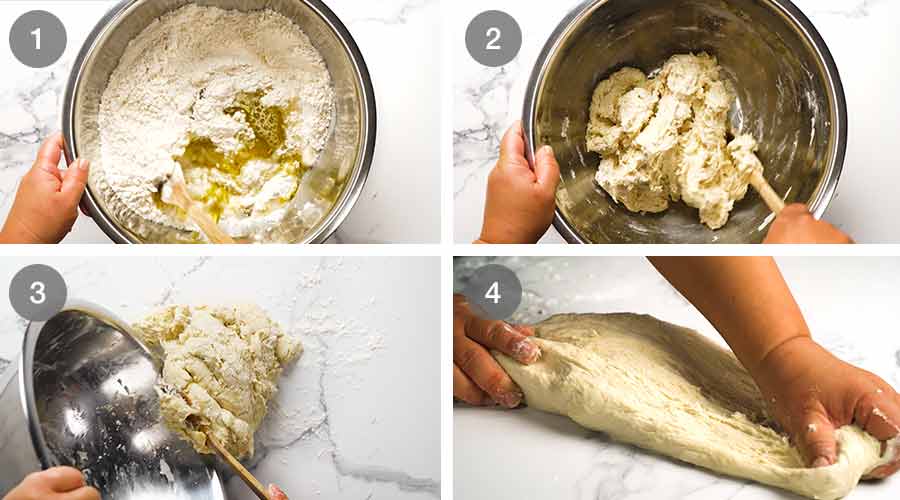
Mix flour, yeast, salt and sugar, then mix in water and oil;
It will come together into a rough dough that leaves the bowl pretty clean;
Scrape out onto a floured work surface and bring it together into a ball; then
Knead for 5 minutes using your hand or 3 minutes in a stand mixer (see next section for food processor).
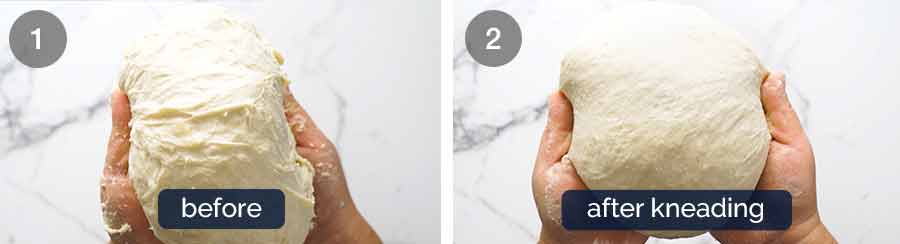
This is what the dough looks like before and after kneading. It doesn’t need to be completely smooth like some bread doughs.
40 Second Pizza Dough – food processor
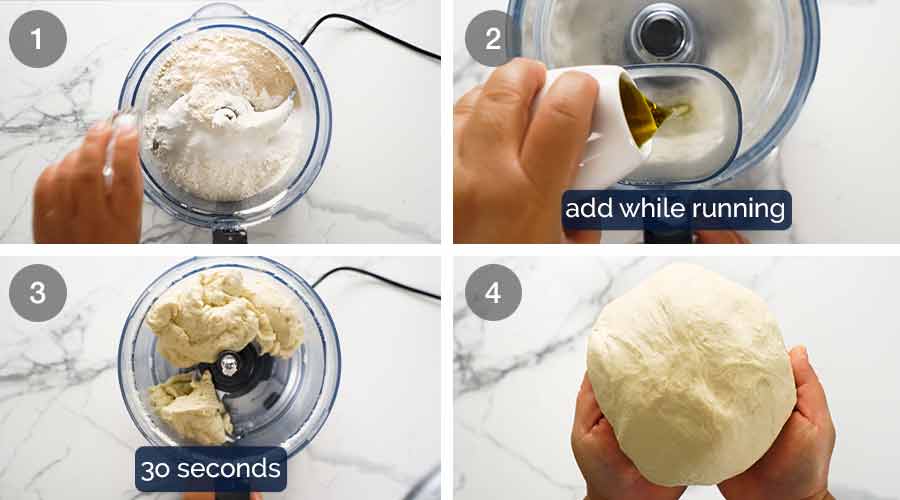
After years of hand kneading, I’ve discovered in recent weeks that it can be made in a food processor in less than a minute. End result is exactly the same!
The trick is to pour the water in gradually while the motor is running, then just blitz for 30 seconds to develop the gluten (instead of 5 minutes of hand kneading). Unless you have a very large food processor, the dough will not turn into a neat ball inside the food processor – and that’s fine, it’s still kneaded.
Also, the dough pulls away from the edges and blade so the food processor is easy to clean, which makes this method even more appealing!
Dough Rise # 1
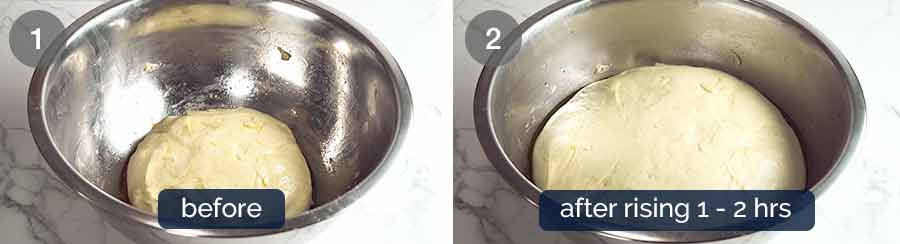
After the dough has been kneaded using your method of choice, it’s time to let it rise.
Drizzle the same bowl with olive oil, then put the dough in;
Cover with cling wrap and rise 1 hour in warm place. Once the dough has risen, use immediately or refrigerate up to 5 days for even better flavour!
Optional: Fridge up to 5 days = extra flavour!
The beauty of this dough is that it’s fantastic made and cooked right now, but it’s better tomorrow and even better on day 5! This is because dough develops more flavour over time.
Typically, I make pizza dough the night before, leave it overnight then make it the next day.
Just put the bowl in the fridge with the puffy dough in it, don’t punch it down and deflate. The dough may rise a little bit more in the fridge. If it deflates, that’s ok too.
It can also be frozen. Directions provided for fridge and freezer in the recipe.
Part 2: Forming balls
If you refrigerated your dough, take the bowl out of the fridge then immediately proceed with these steps starting with cold dough.
.jpg)
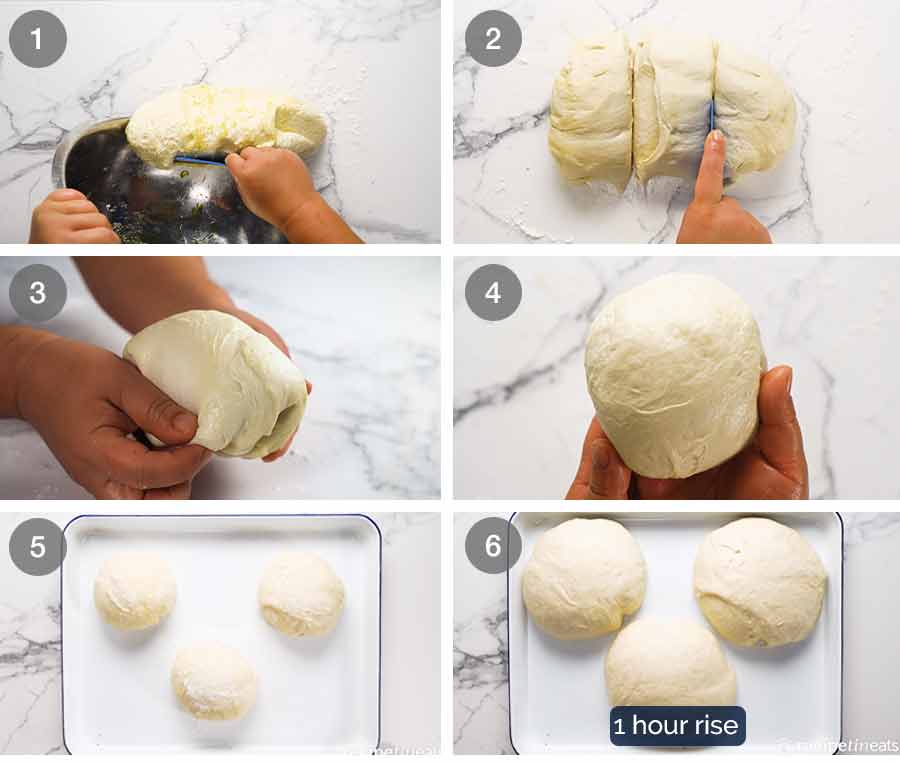
Scrape dough out of bowl;
Shape into a log, knocking out all the air, and cut into 3 equal pieces;
Tuck the sides of the dough underneath, money-bag style;
This stretches the dough on one side so you have a smooth surface;
Place on a tray, then cover with a damp tea towel;
Rise for 1 hour in a warm place until almost doubled in size. If your dough was in the fridge, this will take 3 – 4 hours (because the dough needs to come to room temperature first before it will start to rise).
After the balls have risen, you can leave them sitting around like that for up to 5 hours in a cooler room (so they don’t continue rising – if they rise way too much eg 3x or more, it won’t rise in the oven). Just make sure to keep covered with a damp tea towel so they don’t dry out.
Part 3: Stretch pizza base
There’s many ways to stretch dough to make the pizza base and they all work just fine, just remember these 2 golden rules:
Don’t handle the edges so you don’t knock the air out = authentic puffy edges
Use a light touch – if you flatten the dough to death you’ll end up with a dry, super crisp crust. Pizza dough should be stretched, pulled and pushed outwards as opposed to flattening down like when rolling out pie crusts.
Do not stress about forming perfect bases. Patch tears with extra dough. Wonky and bumpy = hidden once baked. Rustic = authentic!
I typically use this easy stretch-on-counter method:
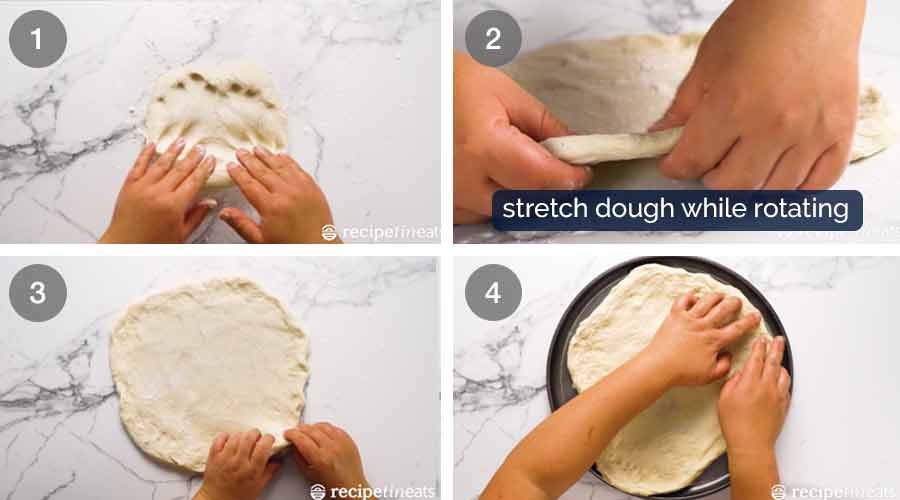
Use fingers to flatten puffy dough dome and stretch it out slightly. I never press down or pinch the edges;
Once you flatten with your fingers / palm, then start using your hands to stretch and pull the dough to make it larger, rotating as you go, until it’s almost about 25cm / 10″ wide;
Drag onto pizza pan, then continue to shape, pulling right to the edge of the pan.
Part 4: The Sauce
Here are our Pizza Sauce recipes. We have three versions:
Cooked down pizza sauce using canned tomato, simmered to cook out water and thicken, then cooled prior to using.
Almost-instant pizza sauce made using tomato paste. I use this one the most because there’s a slight tang that cuts through the richness of the toppings, with salt and sugar added for balance. Plus, it takes seconds to make!
An “in-between” pizza sauce that gains freshness from passata, a hit of tomato paste for some intensity, but without the hassle of any cooking.
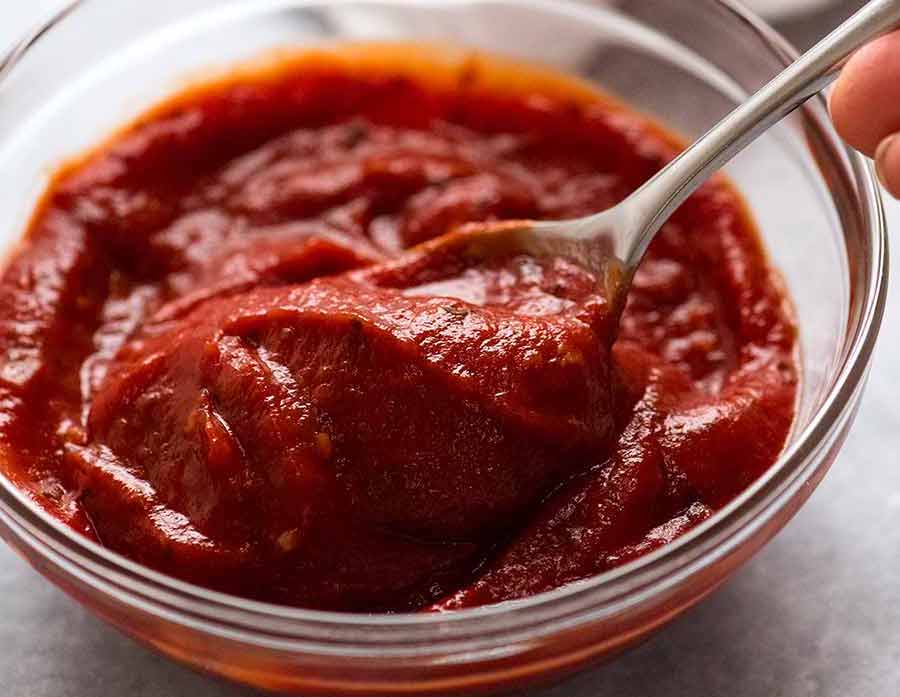
Supreme and other pizzas with salty meat toppings are a good example of the type of pizzas that are ideal to make using the Instant Pizza Sauce because the slight sourness from the tomato paste balances out the strong flavoured toppings.

Part 5: Toppings – don’t be greedy!
See the RecipeTin Eats Pizza Toppings menu for recipes for our favourite pizzas.
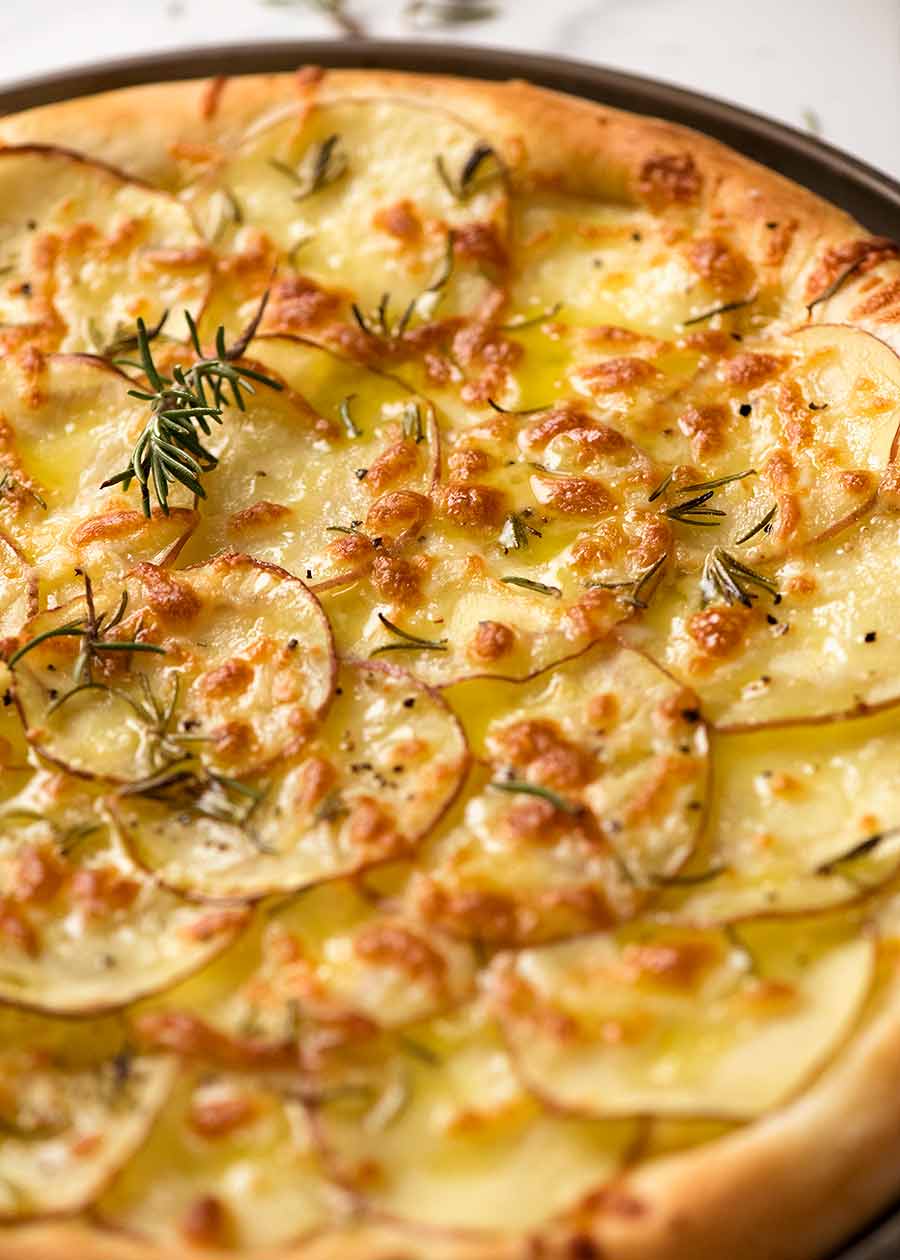
You can top pizzas with anything your heart desires, but the key thing to remember is this: LESS IS MORE!
Pizza bases like this are not built for fully loading with toppings. It weighs down the dough, prevents the crust from rising, the centre of the pizza ends up soggy and it will be sloppy when you pick it up.
I’m the biggest offender of being greedy with toppings – and I always regret it. So this lecture is really for me!

Useful tip: use freshly shredded cheese rather than store bought which is cut thicker so it’s heavier, so you need more to cover the pizza which weighs the crust down.
Part 6: Baking
Pizza stone > pizza pan with holes > baking sheet.
I use a pizza pan with holes in it 99% of the time for sheer convenience. The holes lets the heat have direct contact with most of the base which makes it crisper than using a normal baking tray, and it’s less fussy to use than a baking stone.
If you use a baking stone, you need to assemble the pizza on a paddle, then slide it onto the preheated stone. (See recipe notes for directions)
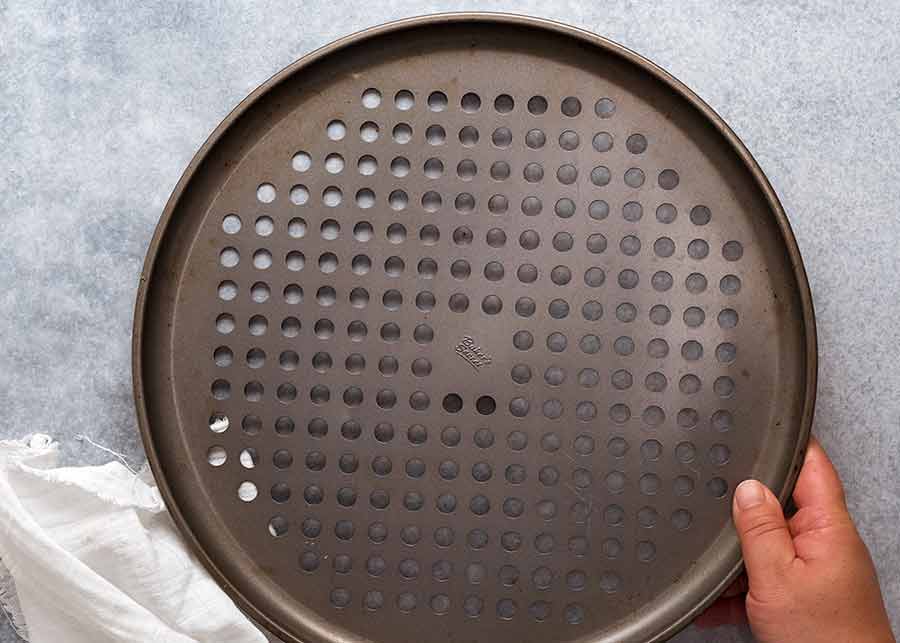
Pro tip: look for pizza pans with extra large holes. Holes = crispier base!

If you use a knife and fork to eat pizza, I’m afraid we can’t be friends…. 
Hands all the way. You won’t have grease running down your elbows because they’re homemade so we use a fraction of the oil of Dominos and Pizza Hut. Which, to my logic, means we can have MORE with LESS GUILT.

Parbake make-ahead pizza bases
The pizza bases can be par-baked then stashed in the freezer for handy pizza-on-demand! Just stretch out the pizza bases per this recipe, and bake for just 2 minutes at 275°C/530°F (all oven types), or as high as your oven will go if it won’t go that high.
The pizza bases will be pale and just cooked through in the centre which is what you want. Remove from hot trays onto cooling racks, then wrap in cling wrap and freeze. (Or refrigerate only overnight)
To use, thaw (about 2 hours on counter, or half a day in fridge), top, then bake 10 minutes at temp per recipe.
Note: Freezing straight away is key to keeping the bases fresh, it will keep for a few months and be fresh once thawed as long as it’s properly wrapped or better yet, also in an airtight container. If you refrigerate, it’s fine the next day but noticeably drier the day after